Lobby + feature surfaces
Create a focused wood, stone, metal, textile, or solid-color material direction.
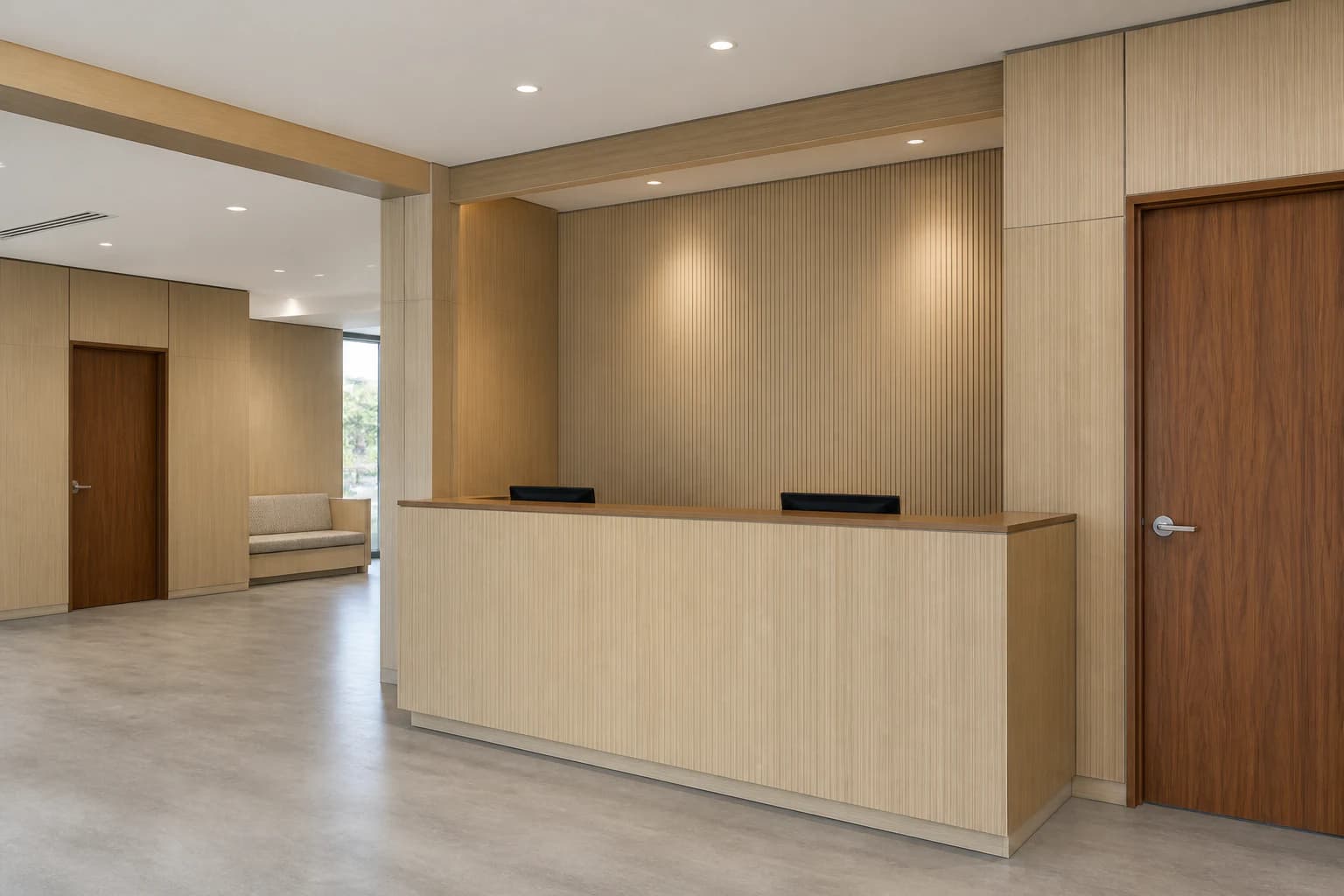
Commercial surface renewal studio
VYVD develops the design direction, coordinates physical samples, specifies and supplies the finish system, verifies the site, and professionally installs renewal for suitable wall panels, built-ins, and millwork.
Design changes perception
Large surfaces and integrated millwork shape how a hotel, restaurant, workplace, healthcare, or retail interior feels. A considered finish can change that experience while retaining suitable structure underneath and reducing unnecessary teardown.
What can change
Final specification follows substrate review. The finish should support the surface, its joints, and the way the space is actually used.
Create a focused wood, stone, metal, textile, or solid-color material direction.
Renew suitable smooth panels while retaining the existing panel layout and substrate.
Coordinate shelving, fixed casework, niches, and integrated storage with the space.
Unify selected surrounds, panels, casework, and display elements where conditions permit.
Reframe existing custom details without automatically rebuilding serviceable pieces.
Develop a consistent finish direction across desks, fixtures, and branded focal surfaces.
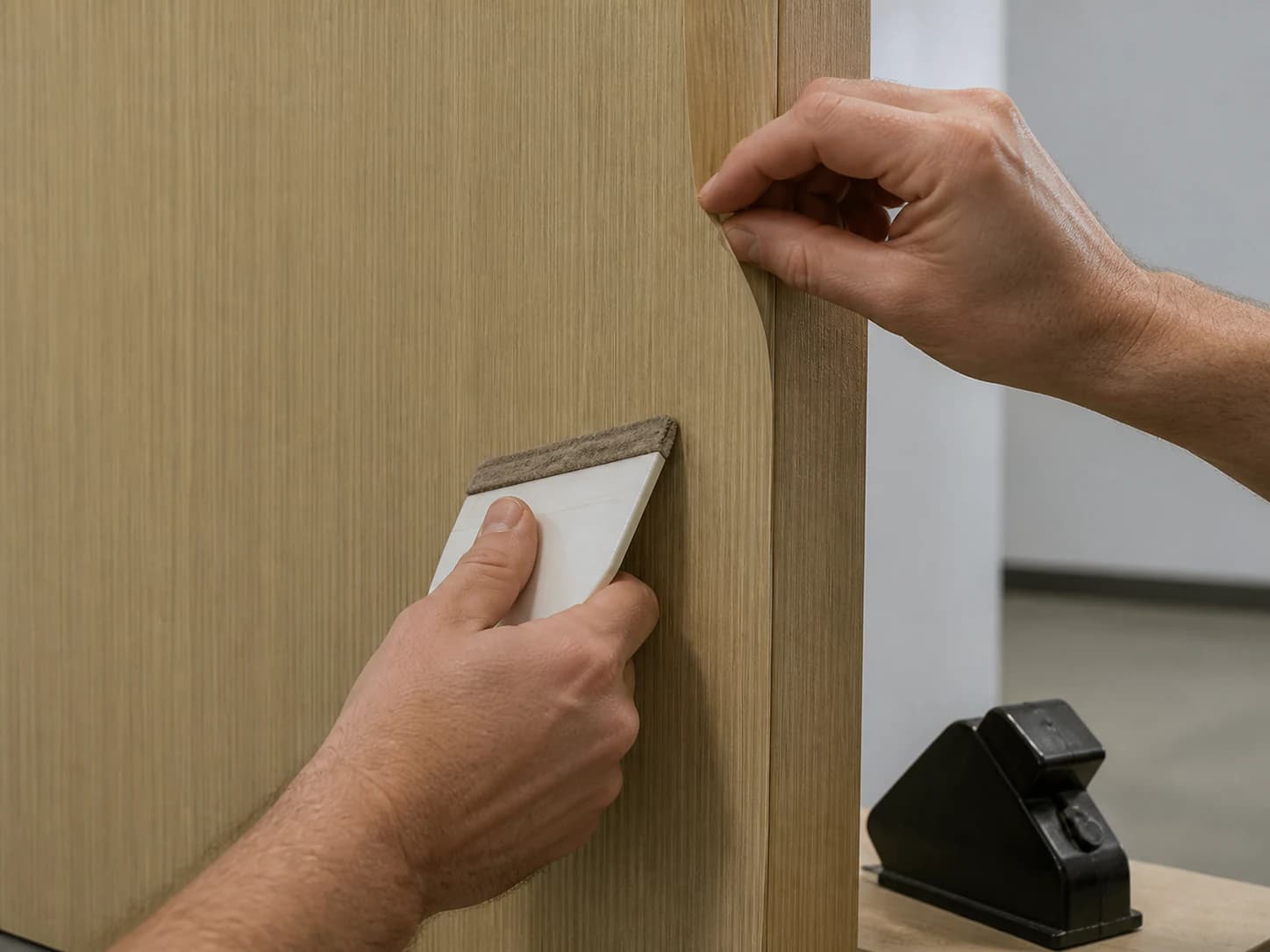
One studio from direction to installation
Begin with the walls, panels, built-ins, or connected surfaces under consideration. A photo-based transformation concept is optional.
VYVD coordinates contrast, continuity, and character across the visible surfaces as one commercial renewal.
Review physical samples, then confirm substrates, joints, edges, access, operating constraints, and the intended application.
VYVD prepares suitable surfaces and installs the approved finish system around the verified scope, details, and operating hours.
Questions, answered
No. Smooth, stable, well-prepared panels and selected wall surfaces are the strongest candidates. Texture, movement, moisture, damage, coatings, joints, and substrate condition can affect suitability, so the actual surface and intended application must be verified.
Many sound built-ins can be transformed in place, depending on their material, condition, geometry, edge access, hardware, and surrounding construction. Project-specific site verification confirms the appropriate approach.
The finish changes the visible material, but it does not erase the construction beneath it. Existing joints, profiles, reveals, gaps, and transitions are assessed and incorporated into the installation plan.
Yes, when the substrates and selected material are suitable. A finish direction can connect a wall surface with shelving, millwork, doors, or nearby fixed casework while preserving deliberate contrast where it helps the design.
It is a design-direction tool, not a material guarantee. It helps you judge placement and visual impact. Final grain scale, sheen, color, seams, and edge details are confirmed using a physical sample and site conditions.
Share the selected concept with the project context, or begin directly with an existing brief. VYVD can then coordinate physical samples, specify the application, verify the surfaces, and define preparation, access, phasing, and professional installation.
Design through installation